How much protein do you actually need?
The official target prevents deficiency. It is not a prescription for muscle, aging, or weight. Here is how to read the numbers, and when more is not better.
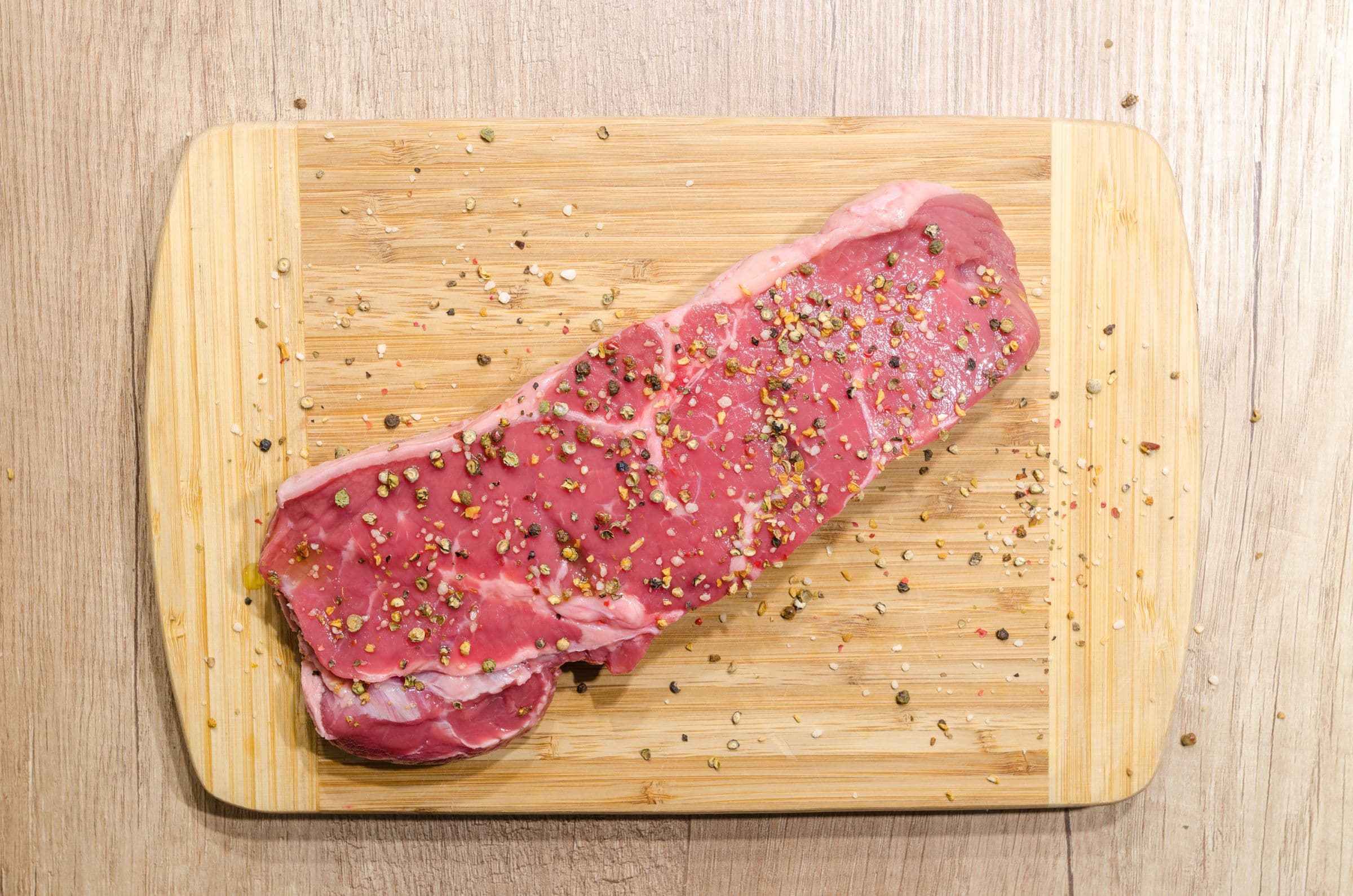
The most repeated number in American nutrition is 0.8 grams of protein per kilogram of body weight per day. For a person who weighs 70 kilograms (about 154 pounds), that is 56 grams, a chicken breast, a cup of Greek yogurt, and a modest serving of beans, give or take.
That figure is also one of the most misunderstood. It is the Recommended Dietary Allowance: an estimate meant to cover the needs of nearly all healthy adults for preventing deficiency. It is not a finding that 56 grams is the best intake for preserving muscle at 70, recovering from training, or managing appetite. Treating the RDA as a ceiling is a mistake. Treating 2 grams per kilogram as a lifestyle identity is another.
What the official number is trying to do
Protein requirements were set using nitrogen-balance studies, a method that asks, roughly, whether the body is taking in as much nitrogen as it loses. Those studies are useful for spotting inadequacy. They are less useful for answering modern questions: How much protein helps an older adult keep walking up stairs? How much extra, if any, does a recreational lifter need on top of an already adequate diet?
When researchers use outcome measures such as lean mass or strength, the picture shifts. Meta-analyses of resistance training generally find that protein intakes above the RDA, often in the range of about 1.2 to 1.6 g/kg, are associated with larger gains, with diminishing returns beyond that for most trained people. That is a training finding, not a license for everyone to double their intake at breakfast.
For older adults, several expert groups have argued that 1.0 to 1.2 g/kg is a more practical starting range than 0.8, because aging blunts the muscle-building response to a given meal (anabolic resistance) and because illness can raise needs further. Those are consensus positions, not commandments. They also assume the person can eat that much without crowding out other foods they need.
A more useful way to do the arithmetic
Start with body weight, then adjust for the goal and the clinical picture, not for the claim on a powder tub.
- Most healthy, relatively sedentary adults: landing near 0.8–1.0 g/kg from mixed meals is adequate. If appetite is low or meals are carbohydrate-heavy, a deliberate protein food at each meal is often the fix, not a supplement stack.
- Adults over about 65, or anyone losing muscle: 1.0–1.2 g/kg is a reasonable planning range unless a clinician has restricted protein.
- People doing regular resistance training: 1.2–1.6 g/kg covers the evidence for most recreational athletes. Higher intakes are used in some sport settings; they are not required to “make protein work.”
- Weight loss: a higher protein share of calories can help preserve lean mass and manage hunger. That is about the proportion of a reduced-calorie diet, not an argument for unlimited protein on top of an unchanged calorie intake.
Per-meal distribution is a secondary, not primary, lever. Muscle protein synthesis responds to a threshold dose of essential amino acids, often discussed as roughly 20–40 grams of high-quality protein per eating occasion for adults, with older adults tending toward the higher end. Three meals that each contain a clear protein source beat one 80-gram dinner after a protein-free day. It does not follow that you must eat every three hours or that timing after a workout is a make-or-break rule for non-athletes.
Food first, powders second
A “high-quality” protein is one that supplies essential amino acids, especially leucine, in a form the body can use. Eggs, dairy, fish, poultry, and lean meat do this efficiently. Soy is the plant protein that most consistently matches animal proteins on that score. Other legumes, grains, nuts, and seeds can meet needs in a varied diet; the practical issue is volume and planning, not a biological inability to build muscle on plants.
This is where consumer advice often goes wrong in two opposite directions. One camp implies that plant proteins are inadequate unless they are powdered and “complete” in a single scoop. The other implies that any protein discussion is a gateway to fad dieting. Neither is a careful reading. Mixed meals (rice and beans, tofu and grains, yogurt and fruit) have been covering amino acid needs for a long time.
Protein powders are a convenience product. They can help someone who is between meetings, recovering from dental work, or genuinely struggling to chew enough food. They are not more “anabolic” than an equivalent dose of food protein for a healthy adult. When we begin ranking powders, we will treat them as manufactured products: label accuracy, contaminant risk, added sugar, and cost per effective serving, not as a food group.
What higher intake does not do
Protein is satiating. It is not a metabolic loophole. Extra protein still contains calories. Diets that “work” on high protein usually work because total energy intake fell, not because protein burned a special furnace.
The kidney myth is more specific. In people with healthy kidneys, higher protein intakes have not been shown to cause chronic kidney disease. Observational signals in that direction are entangled with overall diet and with people who already have reduced function. That is not the same as a clean bill of health for 3 g/kg in perpetuity, and it is not advice for anyone with known kidney disease, who may need a restricted plan.
There is a quieter downside to very high protein eating: displacement. A day built around meat, shakes, and eggs is a day that often undershoots fiber, potassium, and the plant foods that show up in heart and gut research. “Hit your protein” is a poor substitute for diet quality.
How we will evaluate this later
Protein is one of the first categories we intend to take into Best of rankings, especially powders, ready-to-drink shakes, and bars. The nutrition question (how much do you need?) is separate from the product question (does this tub contain what it claims, and is the dose honest?). We will not rank a powder as “best” because it is fashionable or because a study used a university logo in an ad.
Until those evaluations exist, the conservative position is unglamorous: eat a protein-containing food at most meals, use the ranges above as planning tools, and treat anything above about 2 g/kg as a special-case strategy, not a default.
Nutritionist Guide is not your clinician. People with kidney or liver disease, those who use certain medications, and anyone with a history of disordered eating should not adopt a high-protein plan from an article.
Bibliography
Sources and references
Citations below are representative of the evidence types we consult. They are drafted as examples for this preview site and should not be treated as a complete or verified bibliography.
- 01Institute of Medicine. Dietary Reference Intakes for Energy, Carbohydrate, Fiber, Fat, Fatty Acids, Cholesterol, Protein, and Amino Acids. National Academies Press. (Example citation, illustrative of the DRI/RDA source type we consult.)
- 02Bauer J, et al. Evidence-based recommendations for optimal dietary protein intake in older people: a position paper from the PROT-AGE Study Group. J Am Med Dir Assoc. (Example citation.)
- 03Morton RW, et al. A systematic review, meta-analysis and meta-regression of the effect of protein supplementation on resistance training–induced gains in muscle mass and strength in healthy adults. Br J Sports Med. (Example citation.)
- 04Phillips SM, Chevalier S, Leidy HJ. Protein “requirements” beyond the RDA: implications for optimizing health. Appl Physiol Nutr Metab. (Example citation.)
- 05Knight EL, et al. The impact of protein intake on renal function decline in women with normal renal function or mild renal insufficiency. Ann Intern Med. (Example citation.)