CJC-1295 and ipamorelin: a GH stack, not an anti-aging drug
Early CJC-1295 shots can raise GH and IGF-1. Ipamorelin’s Phase 2 ileus trial missed its primary endpoint. That is not a published RCT package for a cash-pay fat-loss stack. Physician or trial only. Foundations first.

Cash-pay clinics are selling CJC-1295 plus ipamorelin as a “GH peptide stack.” Influencers caption the pair as fat loss, sleep, recovery, and anti-aging in one cart. Gray-market shops print “not for human use” on a carton and write a body-recomp caption at checkout. Early human pharmacology can look promising. The published outcomes file for the stack being sold does not support that marketing.
This desk does not recommend cash-pay or gray-market CJC-1295, ipamorelin, or combination “GH peptide stacks” as wellness, fat-loss, or anti-aging products. Any compounded, subcutaneous, or intravenous use belongs with a licensed physician for a defined medical indication or a registered trial, not a browser cart. Exhaust the safe foundations first: sleep, training you can recover from, dietary protein, and creatine monohydrate. Those have a thicker human record than a hormone-axis research pair.
This is piece 4 of the same caution series as NAD+, NMN, and NR: what the evidence says, BPC-157: a research peptide, not a healing vitamin, and TB-500: a research fragment, not a recovery drug. Promising early research is not a DIY product. The chemistry is different. The refusal is the same.
What these peptides are, and what they are not
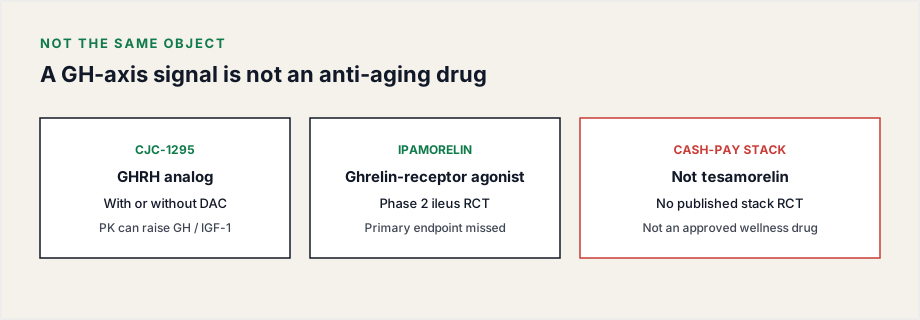
CJC-1295 is a synthetic analog of growth-hormone-releasing hormone (GHRH), built on the GHRH(1-29) backbone. Some forms carry a drug-affinity complex (DAC), a maleimidopropionyl linker that lets the peptide bind serum albumin and last days instead of minutes. Catalogs also sell a shorter-acting form without DAC, sometimes under a different common name. FDA’s 2024 compounding briefing treats those as different nominated bulk substances: free base, acetate, DAC free base, DAC acetate, and DAC trifluoroacetate. The agency notes that the common name does not reliably identify one active moiety.
Ipamorelin is a different object. It is a selective ghrelin-receptor agonist, a growth-hormone secretagogue. It is not GHRH. It is not CJC-1295. Stacking the two is a clinic marketing habit, not a published combination monograph.
Neither peptide is growth hormone. A secretagogue asks the pituitary to release GH if the gland can still do that. It is not a vial of somatropin. It is not tesamorelin (Egrifta), the GHRH analog FDA approved in 2010 to reduce excess abdominal fat in HIV-infected adults with lipodystrophy. That label says the product is not indicated for weight-loss management and that long-term cardiovascular safety has not been established. An approved analog for one HIV indication is not a shopping claim for a cash-pay stack.
These peptides are not vitamins. They are not creatine. They are not FDA-approved drugs.
How we evaluated this
We read the 2006 CJC-1295 pharmacokinetic papers, the 2014 ipamorelin ileus Phase 2, FDA’s compounding safety page, the October and December 2024 Pharmacy Compounding Advisory Committee minutes and briefing slides, the tesamorelin label, and the 2026 WADA Prohibited List. We did not treat manufacturer blogs, Telegram protocols, or “research use” product pages as evidence.
Teichman, Neale, Lawrence, Gagnon, Castaigne, and Frohman (2006) is the cleanest human CJC-1295 file: two randomized, placebo-controlled, ascending-dose trials that measured GH, IGF-1, and half-life in healthy adults. Ionescu and Frohman (2006) mapped overnight GH pulsatility after a single dose. Beck, Sweeney, and McCarter (2014) is the published ipamorelin randomized trial that wellness catalogs rarely finish quoting. FDA’s December 2024 slides are the public record of the terminated HIV-lipodystrophy program.
We do not invent response rates. Where a paper reports a fold-change or a p-value, we attribute that figure to that paper and keep the endpoint (biomarker, ileus, or safety signal) in the sentence. We do not turn a PCAC vote into a finished regulation.
A rise in GH or IGF-1 is not an anti-aging license
Teichman’s two trials randomized healthy adults, ages 21 to 61, to subcutaneous CJC-1295 or placebo. After a single injection, mean plasma GH rose 2- to 10-fold for six days or more, and mean IGF-1 rose 1.5- to 3-fold for nine to eleven days. The estimated half-life was 5.8 to 8.1 days. After weekly or biweekly doses, mean IGF-1 stayed above baseline for up to 28 days. The authors reported no serious adverse reactions in those studies. They also reported injection-site reactions in most actively treated subjects, plus headache, diarrhea, and systemic vasodilatory reactions (flushing, warmth, transient hypotension), especially at higher doses.
Ionescu and Frohman sampled healthy men overnight, one week after 60 or 90 µg/kg. Pulse frequency and size did not change. Trough GH rose 7.5-fold. Mean GH rose 46 percent. IGF-1 rose 45 percent.
That is real human pharmacology. It is also the wrong object for a checkout flow. A blood biomarker is not a younger body. We said the same thing about oral NAD+ precursors and whole-blood NAD+. The molecule changed. The rule did not.
There is no published peer-reviewed randomized trial that tests a consumer CJC-1295 plus ipamorelin stack against fat loss, lean mass, sleep quality, injury recovery, or aging. A clinic protocol is not that file. A registry row is a plan, not a result.
Ipamorelin’s published RCT missed its primary endpoint
Here is the honest inventory for ipamorelin.
Beck, Sweeney, and McCarter randomized adults after small- or large-bowel resection to intravenous ipamorelin 0.03 mg/kg twice daily or placebo, from postoperative day 1 through day 7 or discharge (NCT00672074). One hundred seventeen patients were enrolled; 114 entered the safety and modified intent-to-treat analyses. The key efficacy endpoint was time from first dose to tolerance of a standardized solid meal. The median was 25.3 hours on ipamorelin and 32.6 hours on placebo (p=0.15). The authors write that there were no significant differences on the key or secondary efficacy analyses.
That is a Phase 2 hospital trial of a ghrelin mimetic for ileus. It is not a fat-loss study. It is not an anti-aging study. It is not a reason to sell a research vial next to a creatine stick. Do not invent a positive efficacy story from a missed primary endpoint.
FDA’s compounding page, citing published literature, also flags serious adverse events including death when ipamorelin was given intravenously for gastric motility, and says the agency lacks sufficient information for certain other injectable routes. We attribute that safety language to FDA. We do not turn it into a new case series of our own.
FDA compounding language is not a product endorsement
Neither CJC-1295 nor ipamorelin is FDA-approved for any indication. On the agency page covering bulk drug substances that may present significant safety risks, CJC-1295 sits on the “nominated but withdrawn” table. The published rationale is immunogenicity for some routes, peptide-impurity and characterization problems, and identified serious adverse events including increased heart rate and systemic vasodilatory reaction, with limited clinical data.
Ipamorelin acetate remains on the 503B Category 2 table (29 September 2023) and also appears on the withdrawn-nomination table. The published rationale is immunogenicity and characterization, unnatural amino acids, and the gastric-motility safety language above. Category 2 is an interim safety flag. It is not a listing. It is not an approval.
FDA staff evaluating the nominated forms for the 503A bulks list proposed that none be included. On 29 October 2024, PCAC voted 0-12-1 against placing ipamorelin free base on that list and 0-12-1 against placing ipamorelin acetate on it. On 4 December 2024, the same committee voted 0-13-0 against listing CJC-1295 free base and each DAC form, and 1-12-0 against listing CJC-1295 acetate. Those tallies come from FDA’s final summary minutes. A PCAC vote is advice. It is not notice-and-comment rulemaking. It does not place a substance on the 503A list. It does not approve a drug. It does not legalize a research-use carton.

The HIV-lipodystrophy program is a safety-signal history, not a shopping claim
ConjuChem ran a Phase 2 trial of weekly CJC-1295 DAC in HIV-associated visceral obesity (about 192 participants enrolled). FDA’s December 2024 briefing records that after an 11th weekly dose, one participant developed chest discomfort, an electrocardiogram confirmed an acute myocardial infarction, and death followed about an hour later. The study was terminated. The data were not published. The attending physician’s explanation, as FDA recorded it, was previously asymptomatic coronary artery disease with plaque rupture, considered unrelated to the study drug.
We will keep both facts. A death in a terminated, unpublished trial is a safety signal that belongs in any honest file. A physician’s attribution is not the same thing as a completed causality analysis, and it is not proof that every clinic vial will cause a heart attack. Do not launder the tesamorelin label, which is a different analog with a different evidence package, onto that unfinished CJC program. Do not launder the unfinished program onto a cash-pay “anti-aging” menu.
Gray-market vials and clinic menus: Poor
Some shops sell CJC-1295 or ipamorelin as lyophilized “research chemicals” with a disclaimer that the vial is not for human use and a caption that assumes it is. FDA has already said the common name CJC-1295 does not reliably identify one salt or DAC form. That is not a nutrition gray area. It is a sterility, identity, and legal problem stacked on an empty consumer-outcomes file.
We will not tell you how to source, reconstitute, dose, or inject CJC-1295 or ipamorelin. If a licensed physician is using a compounded product inside a defined indication or a registered trial, that is their license and their record. A browser cart is not that setting.
Athletes have a second, simpler line. WADA’s 2026 Prohibited List, in force 1 January 2026, names CJC-1295 under growth-hormone-releasing hormone and its analogues, and names ipamorelin under growth-hormone secretagogues and their mimetics, both in section S2.2.4. Prohibited at all times. A “peptide stack” caption does not create a therapeutic-use exemption.
What to do instead
Do the unfashionable work. Sleep. Lift or walk in a way you can recover from. Eat protein on purpose. If you use creatine, use creatine monohydrate as labeled, in a dry powder or a dry stick mixed fresh, not a melted gummy and not a peptide. We laid out the gummy problem in Creatine gummies: why we don’t recommend them. The NAD+, BPC-157, and TB-500 pieces in this series make the same foundations argument for different molecules.

Those foundations will not rewind a decade overnight. They are the habits with outcome data you can actually defend in a clinic note. A research vial with a Telegram protocol does not replace them.
Sister-brand pick: Rephora Labs sticks, not a GH stack
Sister-brand label. Rephora Labs is owned by OCN LLC, the same company that publishes Nutritionist Guide. This is not an outside pick. The outbound link goes to the brand. A creatine stick is not a CJC-1295 alternative, not an ipamorelin alternative, and not a treatment for aging, fat loss, or a hormone deficiency. We are pointing at a better-studied, dry monohydrate habit after you have already decided that creatine belongs in your week.
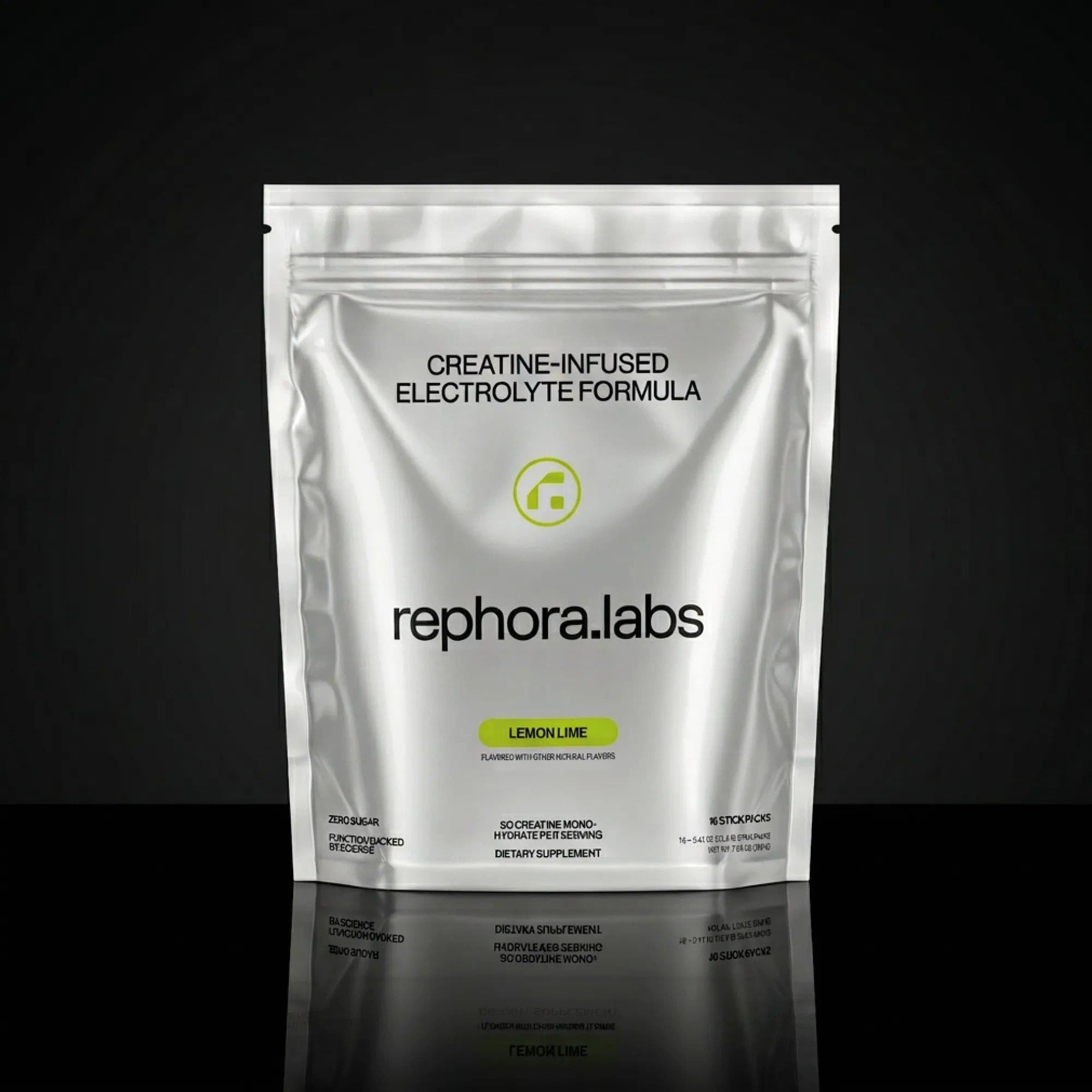
Shop Rephora Lemon Lime on the brand site, or start at rephoralabs.com.
What the brand site states, and what we are repeating as brand facts rather than as a new trial:
- 5 g creatine monohydrate per stick, plus the brand’s IonGate electrolyte blend (840 mg sodium, 1,519 mg chloride, 250 mg potassium, 75 mg magnesium).
- Zero sugar. Mix in about 16 oz of water and drink it.
- Lemon Lime listed at $34.99. The brand claims third-party testing and Made in USA. Those are manufacturer statements.
- We have not run a head-to-head GH-axis trial on the stick. We would not. The point is narrower: if you want creatine, buy a dry monohydrate you mix fresh, read the packet, and skip the peptide menu.
If you never want to hear a sister brand named, use any creatine monohydrate powder with a lot number you can look up. The rating does not require our label.
The short version
CJC-1295 is a GHRH analog. Ipamorelin is a ghrelin-receptor agonist. A stack of the two is not growth hormone, not tesamorelin, and not an anti-aging vitamin. Early CJC-1295 shots can raise GH and IGF-1. That is a biomarker. Ipamorelin’s published Phase 2 ileus trial missed its primary endpoint. There is no published RCT of the consumer stack. FDA’s compounding file proposed against 503A listing, recorded a terminated unpublished CJC program with one fatal myocardial infarction that the attending physician did not attribute to the drug, and left ipamorelin acetate on a 503B Category 2 safety table. PCAC votes against listing are not regulations. Gray-market vials and cash-pay “GH peptide” menus are Poor. Sleep, training, protein, and creatine monohydrate as labeled remain Excellent foundations. They are still not a peptide. They are simply the better-studied place to spend a week.
If a clinic will not show you the outcomes trial behind the vial, walk out. If a bottle claims to rewind aging because a two-week IGF-1 curve moved, leave it on the shelf. If a carton arrives with a research-use sticker and a wellness caption, that is your answer.
Nutritionist Guide is not your clinician. This page is not medical advice, not a dose table, and not a protocol for compounding, injecting, or ingesting CJC-1295, ipamorelin, tesamorelin, or growth hormone. People who are pregnant, trying to conceive, breastfeeding, living with cancer, diabetes, heart disease, liver or kidney disease, or a pituitary disorder, or managing a complex medication list should not start a research peptide because a podcast said so. Talk to the clinician who already has your chart. Athletes subject to anti-doping rules should treat WADA S2.2.4 as a stop sign, not a gray area.
Bibliography
Sources and references
Linked citations go to the publisher, PubMed, PMC, or the news report. Marketplace assays are industry testing, not randomized trials.
- 01Teichman SL, Neale A, Lawrence B, Gagnon C, Castaigne JP, Frohman LA. Prolonged stimulation of growth hormone (GH) and insulin-like growth factor I secretion by CJC-1295, a long-acting analog of GH-releasing hormone, in healthy adults. J Clin Endocrinol Metab. 2006;91(3):799-805. PMID 16352683. Two randomized, placebo-controlled, double-blind, ascending-dose trials in healthy adults aged 21-61. After a single subcutaneous injection, mean plasma GH rose 2- to 10-fold for 6 days or more and mean IGF-1 rose 1.5- to 3-fold for 9-11 days. Estimated half-life 5.8-8.1 days. After multiple doses, mean IGF-1 stayed above baseline for up to 28 days. No serious adverse reactions were reported in those PK/PD studies. Flushing, warmth, and transient hypotension occurred, especially at higher doses. Biomarker movement, not a longevity or body-recomposition outcomes trial. PubMed
- 02Ionescu M, Frohman LA. Pulsatile secretion of growth hormone (GH) persists during continuous stimulation by CJC-1295, a long-acting GH-releasing hormone analog. J Clin Endocrinol Metab. 2006;91(12):4792-4797. PMID 17018654. Overnight 12-hour sampling in healthy men aged 20-40, one week after 60 or 90 µg/kg CJC-1295. Pulse frequency and magnitude were unaltered. Trough GH rose 7.5-fold; mean GH rose 46%; IGF-1 rose 45%. Pharmacology of a GHRH analog, not a consumer fat-loss RCT. PubMed
- 03Beck DE, Sweeney WB, McCarter MD; Ipamorelin 201 Study Group. Prospective, randomized, controlled, proof-of-concept study of the Ghrelin mimetic ipamorelin for the management of postoperative ileus in bowel resection patients. Int J Colorectal Dis. 2014;29(12):1527-1534. PMID 25331030. NCT00672074. Phase 2, multicenter, double-blind, placebo-controlled. One hundred seventeen adults enrolled after bowel resection; 114 in the safety and modified intent-to-treat populations. Intravenous ipamorelin 0.03 mg/kg twice daily versus placebo. Key efficacy endpoint: time from first dose to tolerance of a standardized solid meal. Median 25.3 hours versus 32.6 hours (p=0.15). No significant differences on the key or secondary efficacy analyses. Hospital ileus trial, not a wellness stack. PubMed
- 04U.S. Food and Drug Administration. Certain bulk drug substances for use in compounding that may present significant safety risks. CJC-1295 sits on the “nominated but withdrawn” table. Published rationale: immunogenicity for some routes, peptide-impurity and characterization problems, and identified serious adverse events including increased heart rate and systemic vasodilatory reaction; available clinical data are limited. Ipamorelin acetate remains on the 503B Category 2 table (added 29 September 2023) and also appears on the withdrawn-nomination table. Published rationale: immunogenicity and characterization concerns, unnatural amino acids, and literature identifying serious adverse events including death when ipamorelin was given intravenously for gastric motility; FDA states it lacks sufficient information for certain other injectable routes. Category 2 language and a withdrawn nomination are not drug approvals.
- 05U.S. Food and Drug Administration. October 29, 2024 meeting of the Pharmacy Compounding Advisory Committee. Ipamorelin free base and ipamorelin acetate were on the agenda for growth-hormone deficiency and postoperative ileus. FDA staff proposed that neither form be included on the 503A bulks list. Final summary minutes record votes of 0 yes, 12 no, and 1 abstention on placing each form on the list. A PCAC vote is advisory. It is not notice-and-comment rulemaking, not a finished 503A listing, and not drug approval. FDA minutes (PDF)
- 06U.S. Food and Drug Administration. December 4, 2024 meeting of the Pharmacy Compounding Advisory Committee. Five CJC-1295-related bulk substances were on the agenda for growth-hormone deficiency: free base, acetate, DAC free base, DAC acetate, and DAC trifluoroacetate. FDA staff proposed that none be included on the 503A bulks list. Final summary minutes record 0-13-0 against listing for four forms and 1-12-0 against listing for CJC-1295 acetate. The same briefing records that a 2006 Phase 2 HIV-lipodystrophy trial of CJC-1295 DAC (192 enrolled) was terminated after one participant died of an acute myocardial infarction about three hours after an 11th weekly dose; the attending physician attributed the event to previously asymptomatic coronary disease with plaque rupture and considered it unrelated to the study drug. The trial data were not published. That is a safety-signal history, not a proven causal finding, and it is not a consumer-use license. FDA CJC briefing slides
- 07U.S. Food and Drug Administration. EGRIFTA WR (tesamorelin) for injection, prescribing information. Initial U.S. approval 2010. A growth-hormone-releasing-factor analog indicated to reduce excess abdominal fat in HIV-infected adults with lipodystrophy. Limitations of use include that long-term cardiovascular safety has not been established and that the product is not indicated for weight-loss management. Tesamorelin is not CJC-1295, not ipamorelin, and not a cash-pay anti-aging stack.
- 08World Anti-Doping Agency. World Anti-Doping Code International Standard Prohibited List 2026. In force 1 January 2026. Section S2.2.4 Growth hormone releasing factors names growth-hormone-releasing hormone and its analogues, for example CJC-1293, CJC-1295, sermorelin, and tesamorelin; and growth-hormone secretagogues and their mimetics, for example ipamorelin. Prohibited at all times.
- 09Rephora Labs. Product page at rephoralabs.com/products/rephore-lemon-lime-flavor. Brand-stated stick facts: 5 g creatine monohydrate plus IonGate electrolytes (840 mg sodium, 1,519 mg chloride, 250 mg potassium, 75 mg magnesium), zero sugar, mix in about 16 oz water; Lemon Lime listed at $34.99; third-party tested and Made in USA claims. Not an independent assay and not a growth-hormone trial.