NAD+, NMN, and NR: what the evidence says (and what it does not)
Oral precursors can raise blood NAD+ in short trials. That is a biomarker, not an anti-aging license. IV drips and gray-market injectables are not a wellness product. Foundations first.
Clinics are selling NAD+ drips as a longevity product. Influencers are stacking NMN and NR as if a blood biomarker were a birthday rewind. Gray-market shops are bundling “longevity injectables” next to research peptides. The early cell and animal file can look promising. The human outcomes file does not support that marketing.
This desk does not recommend NAD+ drips, oral NMN, or oral NR as do-it-yourself wellness products. Any intravenous, intramuscular, or compounded use belongs with a licensed physician for a defined medical indication, not a weekend anti-aging menu. Exhaust the safe foundations first: training, sleep, dietary protein, and creatine monohydrate. Those have a thicker human record than a clinic IV.
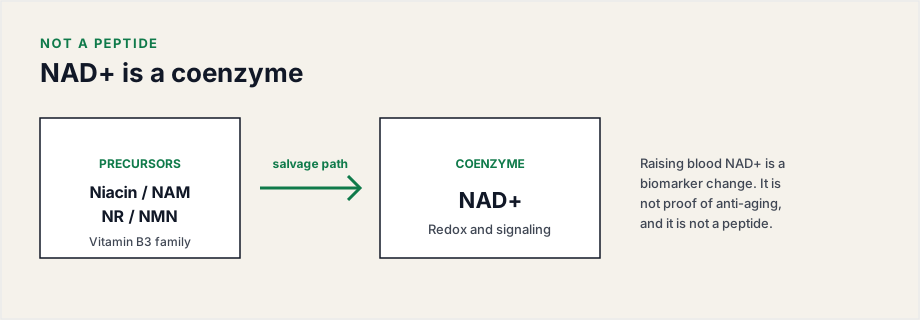
NAD+ is a coenzyme. It is not a peptide. Mixing it into a “peptide stack” is category error, not a protocol.
This is piece 1 of the same caution series as BPC-157: a research peptide, not a healing vitamin. Promising early research is not a DIY product. The chemistry is different. The refusal is the same.
What NAD+ is, and what it is not
Nicotinamide adenine dinucleotide in its oxidized form (NAD+) is a coenzyme. Cells use it in redox reactions and as a substrate for enzymes involved in DNA repair and other signaling. Precursors in the diet and in supplements include nicotinic acid (niacin), nicotinamide (NAM), nicotinamide riboside (NR), and nicotinamide mononucleotide (NMN). Those compounds can feed the salvage pathway that rebuilds NAD+.
That chemistry is real. It does not make NAD+ a peptide, a hormone, or a drug with an approved anti-aging indication. It does not make an intravenous bag a substitute for an outcomes trial. And it does not make a rise in whole-blood NAD+ the same thing as a younger vascular system, a younger brain, or a longer life.
How we evaluated this
We read human randomized trials and narrative or systematic reviews, not manufacturer blogs. The 2025 Nature Metabolism review by Vinten, Trętowicz, and colleagues is the current high-level map of NAD+ precursor supplementation in human ageing. Freeberg and colleagues (2023) reviewed dietary NAD+-boosting compounds in humans and asked whether physiological function actually moves. Song and colleagues (2023) updated the NMN clinical-trial file. Conze, Brenner, and Kruger (2019) is the eight-week NIAGEN (NR chloride) safety and metabolism RCT. Igarashi and colleagues (2022) is the twelve-week NMN trial in healthy older men. Irie and colleagues (2020) is a single-dose oral NMN pharmacokinetics and safety study in ten men, not a longevity trial. A 2026 Ageing Research Reviews paper used a PRISMA-guided search for NAD+ supplementation aimed at anti-aging and wellness, and it is the cleanest public statement we have found on the intravenous evidence gap.
We do not invent response rates. Where a paper reports a percentage change in blood NAD+, we attribute that figure to that paper. We do not treat a preprint pharmacokinetics pilot as an outcomes trial.
Oral NR and NMN: the blood marker moves; the aging claim does not
The oral file is not empty. It is also not a longevity license.
Conze, Brenner, and Kruger randomized 140 overweight but otherwise healthy adults to placebo or 100, 300, or 1,000 mg per day of NIAGEN (nicotinamide riboside chloride) for eight weeks. The paper reports that whole-blood NAD+ rose in a dose-dependent way. Within two weeks, the authors report increases of 22 percent (100 mg), 51 percent (300 mg), and 142 percent (1,000 mg). They report no flushing and adverse-event rates similar to placebo. That is useful safety and metabolism evidence for that salt, in that dose range, for two months. It is not a demonstration that NR extends healthspan. The trial is industry-affiliated. Cite the paper for the numbers. Do not recycle them as a clinic talking point.
Igarashi and colleagues gave 250 mg of NMN per day for twelve weeks to healthy men aged 65 and older. Blood NAD+ metabolites rose. The supplement was well tolerated. The authors report nominally significant improvements in gait speed and left-hand grip; they did not see a body-composition effect. They say the functional signals need larger studies. That is the right level of caution.
Irie and colleagues gave single oral NMN doses of 100, 250, or 500 mg to ten healthy men aged 40 to 60. The paper is an acute safety and pharmacokinetics study. It is not evidence that NMN reverses aging. If you have seen “Irie 2022, older men” in a marketing thread, that is a name mix-up. The 2022 older-men trial is Igarashi et al. in npj Aging.
Song and colleagues, updating NMN trials in Advances in Nutrition, note that most NMN work is still cell and animal work and that human anti-aging evidence remains a concern. Freeberg and colleagues conclude that NAD+-boosting supplements appear safe and can raise NAD+ in humans, but that effects on physiological function remain unclear because samples are small and dosing and duration vary. Vinten, Trętowicz, and colleagues, writing in Nature Metabolism in 2025, put it in one line we will keep: human clinical trials have shown limited efficacy. They also note that an age-related NAD+ decline is consistently observed in only a limited number of human studies, that tissue NAD+ data are sparse, and that rodent findings do not transfer in a simple way.
So the honest oral summary is narrow. Capsules can engage the biochemical target in blood. Short trials have not produced a clean anti-aging outcome. “Generally well tolerated for weeks to a few months” is not the same sentence as “take this instead of training.”
Intravenous NAD+ for wellness: the outcomes file is empty

This is the part the drip menus skip.
Gallagher and Emmanuel’s 2026 PRISMA-guided review in Ageing Research Reviews (PMID 41655607) searched for NAD+ supplementation used for anti-aging or wellness. The authors screened 113 studies (33 human, 80 rodent). Oral NR and NMN show biochemical target engagement and are generally well tolerated over weeks to months. Functional, metabolic, and vascular outcomes are heterogeneous and often null. The review reports no eligible outcomes trials of intravenous or intramuscular NAD+ itself for anti-aging or wellness. One nonrandomized intravenous NMN study appears as a safety and biomarker report, not as a longevity outcome. Pharmacokinetics work on IV NAD+ is contextual only.
That sentence is doing a lot of work. It means a wellness clinic cannot point to a controlled outcomes trial and say the bag on the pole added healthy years, sharpened cognition in a durable way, or reversed vascular aging. It means “patients feel amazing afterward” is not a substitute for that file. Feeling different during an infusion can be placebo, niacin-like effects, saline, attention, or something else. It is not an aging endpoint.
A 2024 medRxiv pharmacokinetics and tolerability pilot compared intravenous nicotinamide riboside with intravenous NAD+. A preprint about how the compounds behave in blood is not an outcomes trial for anti-aging. We will not treat it as one.
| Claim being sold | What the human file actually holds | | --- | --- | | Oral NR or NMN as a blood-NAD+ raiser | Supported in short RCTs (see Conze; Igarashi) | | Oral NR or NMN as a proven longevity drug | Not supported. Reviews call outcomes limited or inconclusive | | Wellness-clinic NAD+ IV as anti-aging | No eligible IV/IM NAD+ outcomes trials in the 2026 PRISMA review | | Gray-market injectable “stack” | No outcomes file, plus sterility and legal risk |
Physician-directed IV therapy for a defined medical indication is a different conversation from a cash-pay “longevity drip.” We are not writing a protocol for either. We are saying the wellness product does not have the trial it is selling.
Gray-market injectables: Poor, and not a gray area
Some shops now sell NAD+ next to research peptides and “longevity injectables,” often with a disclaimer that the vial is not for human use and a checkout flow that assumes it is. That is not a nutrition gray area. It is a sterility, dosing, and legal problem stacked on an empty outcomes file.
NAD+ is still a coenzyme in that vial. It does not become a peptide because the catalog says “stack.” We will not tell you how to source, reconstitute, or inject it. If a licensed physician is using a compounded product for a defined indication, that is their license and their record. A browser cart is not that setting.
What to do instead
Do the unfashionable work. Lift or do resistance work you can recover from. Walk. Sleep enough hours in a dark room. Eat protein on purpose. If you use creatine, use creatine monohydrate as labeled, in a dry powder or a dry stick mixed fresh, not a melted gummy and not an IV. We laid out the gummy problem in Creatine gummies: why we don’t recommend them.
Those foundations will not make you 25. They are the habits with outcome data you can actually defend in a clinic note. An NAD+ blood test going up after NR does not replace them.
Sister-brand pick: Rephora Labs sticks, not an aging therapy
Sister-brand label. Rephora Labs is owned by OCN LLC, the same company that publishes Nutritionist Guide. This is not an outside pick. The outbound link goes to the brand. A creatine stick is not a NAD+ alternative and it is not a treatment for aging. We are pointing at a better-studied, dry monohydrate habit after you have already decided that creatine belongs in your week.
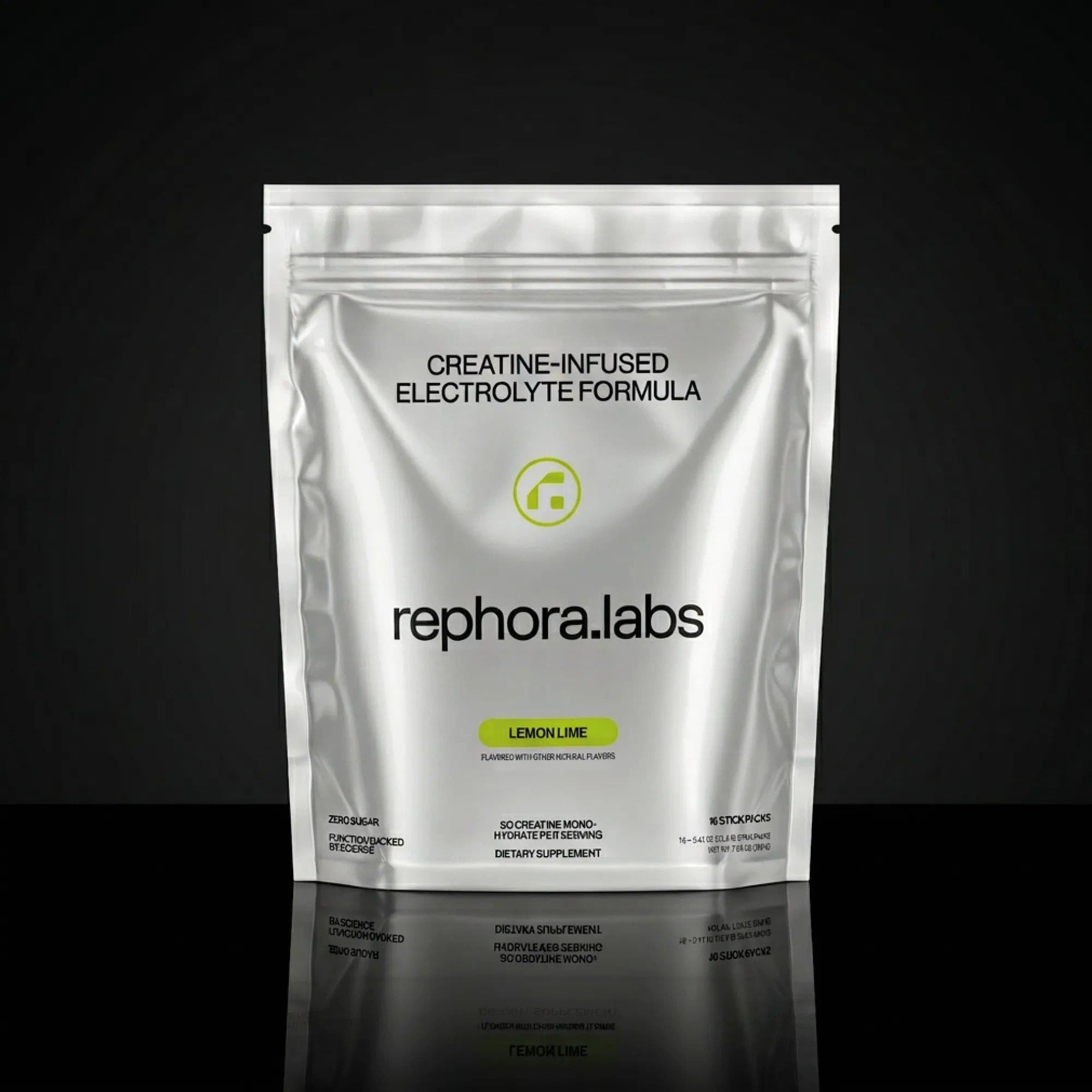
Shop Rephora Lemon Lime on the brand site, or start at rephoralabs.com.
What the brand site states, and what we are repeating as brand facts rather than as a new trial:
- 5 g creatine monohydrate per stick, plus the brand’s IonGate electrolyte blend (840 mg sodium, 1,519 mg chloride, 250 mg potassium, 75 mg magnesium).
- Zero sugar. Mix in about 16 oz of water and drink it.
- Lemon Lime listed at $34.99. The brand claims third-party testing and Made in USA. Those are manufacturer statements.
- We have not run a head-to-head aging trial on the stick. We would not. The point is narrower: if you want creatine, buy a dry monohydrate you mix fresh, read the packet, and skip the drip menu.
If you never want to hear a sister brand named, use any creatine monohydrate powder with a lot number you can look up. The rating does not require our label.
The short version
Oral NMN and NR can raise blood NAD+ in short trials and are generally well tolerated for weeks to a few months. That is target engagement. It is not proof they reverse aging. Wellness-clinic NAD+ IV as an anti-aging product is Poor. Gray-market injectables are Poor. Oral NMN or NR sold as a proven longevity drug is Poor. As an experimental biomarker-raising supplement to discuss with a clinician, Fair. Exercise, sleep, protein, and creatine monohydrate as labeled remain Excellent foundations. They are still not a cure for aging. They are simply the better-studied place to spend a week.
If a clinic will not show you the outcomes trial behind the bag, walk out. If a bottle claims to reverse aging, leave it on the shelf. If a vial arrives with a research-use sticker and a wellness caption, that is your answer.
Nutritionist Guide is not your clinician. This page is not medical advice, not a dose table, and not a protocol for intravenous NAD+, intramuscular NAD+, or any compounded injectable. People who are pregnant, trying to conceive, breastfeeding, living with liver disease, taking chemotherapy, or managing a complex medication list should not start a NAD+ precursor because a podcast said so. Talk to the clinician who already has your chart.
Bibliography
Sources and references
Linked citations go to the publisher, PubMed, PMC, or the news report. Marketplace assays are industry testing, not randomized trials.
- 01Vinten KT, Trętowicz MM, Coskun E, van Weeghel M, Cantó C, Zapata-Pérez R, Janssens GE, Houtkooper RH. NAD+ precursor supplementation in human ageing: clinical evidence and challenges. Nat Metab. 2025 Oct;7(10):1974-1990. PMID 41083806. Human trials show limited efficacy; age-related NAD+ decline is consistently observed in only a limited number of human studies; tissue data remain sparse. PubMed
- 02Freeberg KA, Udovich CC, Martens CR, Seals DR, Craighead DH. Dietary supplementation with NAD+-boosting compounds in humans: current knowledge and future directions. J Gerontol A Biol Sci Med Sci. 2023 Dec 1;78(12):2435-2448. PMID 37068054. Safe and tolerable; can raise NAD+; physiological outcomes remain unclear. PMC10692436
- 03Song Q, Zhou X, Xu K, Liu S, Zhu X, Yang J. The safety and antiaging effects of nicotinamide mononucleotide in human clinical trials: an update. Adv Nutr. 2023;14(6):1416-1435. PMID 37619764. Most NMN work is still cell and animal; human anti-aging evidence remains a concern. PMC10721522
- 04Conze D, Brenner C, Kruger CL. Safety and metabolism of long-term administration of NIAGEN (nicotinamide riboside chloride) in a randomized, double-blind, placebo-controlled clinical trial of healthy overweight adults. Sci Rep. 2019;9:9772. PMID 31278280. NCT02712593. Industry-affiliated. The paper reports dose-dependent whole-blood NAD+ increases within two weeks of 22% (100 mg), 51% (300 mg), and 142% (1,000 mg); no flushing; adverse events similar to placebo. PMC6611812
- 05Igarashi M, Nakagawa-Nagahama Y, Miura M, et al. Chronic nicotinamide mononucleotide supplementation elevates blood nicotinamide adenine dinucleotide levels and alters muscle function in healthy older men. NPJ Aging. 2022;8:5. PMID 35927255. 250 mg/day for 12 weeks in men aged 65 and older; blood NAD+ rose; well tolerated; nominally significant gait speed and left-grip signals; no body-composition effect; authors call for larger studies. PMC9158788
- 06Irie J, Inagaki E, Fujita M, et al. Effect of oral administration of nicotinamide mononucleotide on clinical parameters and nicotinamide metabolite levels in healthy Japanese men. Endocr J. 2020;67(2):153-160. PMID 31685720. Single oral NMN doses of 100, 250, or 500 mg in ten men aged 40 to 60. Acute safety and pharmacokinetics, not a longevity trial. This is not the 2022 older-men RCT (that paper is Igarashi et al.). PubMed
- 07Gallagher C, Emmanuel OO. NAD+ supplementation for anti-aging and wellness: a PRISMA-guided systematic review of preclinical and clinical evidence. Ageing Res Rev. 2026;116:103057. PMID 41655607. 113 studies (33 human, 80 rodent). Oral NR/NMN: biochemical target engagement, generally well tolerated weeks to months; functional, metabolic, and vascular outcomes heterogeneous and often null. No eligible outcomes trials of intravenous or intramuscular NAD+ itself for anti-aging or wellness. PubMed Europe PMC
- 08Rephora Labs. Product page at rephoralabs.com/products/rephore-lemon-lime-flavor. Brand-stated stick facts: 5 g creatine monohydrate plus IonGate electrolytes (840 mg sodium, 1,519 mg chloride, 250 mg potassium, 75 mg magnesium), zero sugar, mix in about 16 oz water; Lemon Lime listed at $34.99; third-party tested and Made in USA claims. Not an independent assay and not an aging trial.