TB-500: a research fragment, not a recovery drug
Full-length thymosin beta-4 has a thin ophthalmic file. That is not a published human RCT package for the TB-500 vials sold as healing peptides. Physician or trial only. Foundations first.
Influencers are selling TB-500 as liquid thymosin. Cash-pay clinics are stacking it with BPC-157 as a “wolverine” recovery menu. Gray-market shops print “not for human use” on a carton and write a tendon caption at checkout. The early cell and animal file can look promising. The published human outcomes file for the vial being sold does not support that marketing.
This desk does not recommend TB-500 as a do-it-yourself wellness or injury-repair product. Any compounded, intramuscular, or subcutaneous use belongs with a licensed physician for a defined medical indication or a registered trial, not a browser cart. Exhaust the safe foundations first: physiotherapy you can recover from, sleep, dietary protein, and creatine monohydrate. Those have a thicker human record than a research fragment.
This is piece 3 of the same caution series as NAD+, NMN, and NR: what the evidence says, BPC-157: a research peptide, not a healing vitamin, and CJC-1295 and ipamorelin: a GH stack, not an anti-aging drug. Promising early research is not a DIY product. The chemistry is different. The refusal is the same.
What TB-500 is, and what it is not
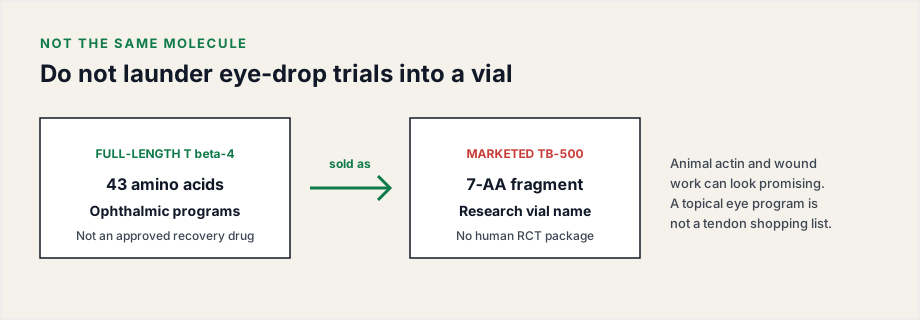
Full-length thymosin beta-4 is a 43-amino-acid peptide. Cells use it as a major G-actin sequestering molecule. Sosne, Qiu, Goldstein, and Wheater mapped several short active sites on that protein, including the central actin-binding sequence LKKTETQ (residues 17 to 23). That is biology. It is not a checkout SKU.
Marketed TB-500 is a synthetic fragment sold under a common name. FDA’s May 2026 compounding briefing, prepared for the July 23-24 Pharmacy Compounding Advisory Committee, treats the nominated bulk substances as seven-amino-acid N-acetylated peptides: Ac-Leu-Lys-Lys-Thr-Glu-Thr-Gln-OH, free base or acetate. The agency notes that TB-500 is not a United States Adopted Name, that it has encountered multiple salts and derivatives sold under the same common name, and that inconsistent naming is itself a safety problem: a patient can be dosed with a different active ingredient than the one on the order.
That is the first refusal. A 43-residue protein studied as an eye drop is not the same object as a seven-residue fragment in a research vial, and the vial may not even be the fragment the label implies.
TB-500 is not a vitamin. It is not creatine. It is not an FDA-approved drug. There is no USP or NF monograph for the free base or the acetate.
How we evaluated this
We read FDA’s TB-500 briefing and the July 2026 PCAC meeting page, the 2026 WADA Prohibited List, the DeFoor and Dekker sports-medicine editorial, and the mechanistic and ophthalmic papers that catalogs recycle as if they were a tendon RCT. We did not treat manufacturer blogs, Telegram protocols, or “research use” product pages as evidence.
Sosne 2010 is the cleanest map of Tβ4 active sites. Philp, Huff, Gho, Hannappel, and Kleinman (2003) is representative angiogenesis work on the actin-binding motif: endothelial-cell migration and chick aortic-arch sprouting. Philp, Badamchian, and colleagues (2003) is a diabetic and aged-mouse dermal-wound paper on Tβ4 and a synthetic actin-binding peptide. Sosne and Ousler (2015) is a 72-person randomized Phase II of full-length Tβ4 eye drops in a controlled adverse environment. Sosne, Dunn, and Kim (2015) is a nine-person topical severe-dry-eye trial. Rahaman and colleagues (2024) quantified TB-500 and metabolites in vitro and in rats. DeFoor and Dekker (2025) put the orthopaedic clinical file in one line: scarce.
We do not invent response rates. Where an ophthalmic paper reports a percentage, we attribute that figure to that paper and keep the route (eye drop) in the sentence. We do not turn a PCAC agenda item into a finished regulation.
The animal and cell file can look promising. Label it as animal.
Philp and colleagues showed that the seven-amino-acid actin-binding motif of thymosin beta-4 promoted angiogenic readouts in cultured human umbilical-vein endothelial cells and in chick aortic-arch explants. The same group reported that Tβ4 and a synthetic peptide containing that actin-binding domain sped dermal wound repair in diabetic and aged mice. Sosne’s 2010 review places LKKTETQ in a short list of motifs tied to angiogenesis, wound healing, and cell migration. Rahaman’s 2024 paper is an analytical and rat metabolism study plus an in-vitro scratch assay.
That is real laboratory work. It is also the wrong object for a checkout flow. Chick-arch sprouting is not a human randomized repair trial. A mouse skin wound is not a hamstring. We said the same thing about BPC-157 tendon models and NAD+ rodent ageing stories. The molecule changed. The rule did not.
The human file that exists is not the vial being sold
Here is the honest inventory.
Full-length Tβ4, topical, eye. Sosne and Ousler randomized 72 adults with moderate to severe dry eye to 0.1% thymosin beta-4 ophthalmic solution or vehicle for 28 days. The primary endpoints, ocular discomfort and inferior corneal staining at day 29, did not differ significantly. Some secondary staining measures and discomfort inside the controlled adverse environment favored the drop. The authors still describe efficacy. We will keep both facts: a randomized ophthalmic Phase II exists, and its primary endpoints missed.
Full-length Tβ4, topical, smaller still. Sosne, Dunn, and Kim randomized nine patients with severe dry eye, including graft-versus-host disease, to RGN-259 (0.1% Tβ4) or vehicle. The paper reports a 35.1 percent reduction in ocular discomfort and a 59.1 percent reduction in total corneal fluorescein staining versus vehicle at day 56. Nine people. An eye drop. Cite the paper for those numbers. Do not recycle them as a clinic talking point for an injectable fragment.
Injectable full-length Tβ4. Registry rows for intravenous Tβ4 in acute myocardial infarction have existed. A listing is a plan. We will not write cardiac efficacy from a row, and we will not transfer a cardiac protocol onto a sports vial.
TB-500 itself, in humans. FDA’s briefing is blunt. The nomination did not include, and FDA did not identify, clinical studies of TB-500 free base or acetate administered in humans. The agency found no published medical-literature case reports on human use that it could treat as a safety file. DeFoor and Dekker, writing for an arthroscopy audience, say the orthopaedic clinical literature on these injectable peptides remains scarce.
Newer registry rows may appear. A ClinicalTrials.gov identifier is a plan, not a result. We will not write efficacy from a listing.
| Claim being sold | What the human file actually holds | | --- | --- | | TB-500 as studied thymosin beta-4 | Full-length Tβ4 is 43 amino acids. FDA evaluates nominated TB-500 as a 7-AA fragment | | Injectable TB-500 as a proven tendon or muscle drug | No published peer-reviewed RCT efficacy package. FDA reported no human clinical studies of TB-500 | | “The eye trials prove it” | Topical full-length Tβ4. One Phase II missed its primary endpoints. A 9-person trial is not a recovery license | | Animal angiogenesis and wound papers | Preclinical. Do not translate them into a shopping list |
FDA compounding language is not a product endorsement
TB-500 is not FDA-approved for any indication. In the July 2026 PCAC briefing, FDA staff wrote that the evaluation criteria weigh against placing TB-500 free base or TB-500 acetate on the 503A bulks list. The original nomination was withdrawn. FDA proceeded on its own initiative because the package did not even make clear which salt was being nominated.
The briefing’s safety language is the relevant public text: the substances are not well characterized; naming is inconsistent; impurity and aggregation data are thin; injectable peptides may pose immunogenicity risk; human safety of the proposed intramuscular and subcutaneous use is unknown; there is a lack of evidence to evaluate effectiveness for wound healing.
That is the opposite of a green light. A 503A compounding pharmacy label is not an NDA. A cash-pay peptide menu is not an IND.
The committee met July 23-24, 2026, and voted on whether to recommend listing. Contemporaneous law-firm reports of that meeting described a split advisory vote in favor of including both forms. We are not treating those reports as FDA minutes, and we are not inventing a final outcome. A PCAC vote is advice. It is not notice-and-comment rulemaking. It does not place a substance on the 503A list. It does not approve a drug. It does not legalize a research-use carton.

Gray-market vials and clinic menus: Poor
Some shops sell TB-500 as a lyophilized “research chemical” with a disclaimer that the vial is not for human use and a caption that assumes it is. FDA has already said the common name does not reliably identify one active moiety. That is not a nutrition gray area. It is a sterility, identity, and legal problem stacked on an empty RCT file.
We will not tell you how to source, reconstitute, dose, or inject TB-500. If a licensed physician is using a compounded product inside a defined indication or a registered trial, that is their license and their record. A browser cart is not that setting.
Athletes have a second, simpler line. WADA’s 2026 Prohibited List, in force 1 January 2026, names thymosin-beta-4 and its derivatives, for example TB-500, under S2.3 Growth factors and growth factor modulators. Prohibited at all times. A “healing peptide” caption does not create a therapeutic-use exemption.
What to do instead
Do the unfashionable work. See a physical therapist for the actual tissue problem. Load the tendon or muscle in a way you can recover from. Sleep. Eat protein on purpose. If you use creatine, use creatine monohydrate as labeled, in a dry powder or a dry stick mixed fresh, not a melted gummy and not a peptide. We laid out the gummy problem in Creatine gummies: why we don’t recommend them. The NAD+ and BPC-157 pieces in this series make the same foundations argument for different molecules.

Those foundations will not make a torn tendon vanish overnight. They are the habits with outcome data you can actually defend in a clinic note. A research vial with a Telegram protocol does not replace them.
Sister-brand pick: Rephora Labs sticks, not a thymosin fragment
Sister-brand label. Rephora Labs is owned by OCN LLC, the same company that publishes Nutritionist Guide. This is not an outside pick. The outbound link goes to the brand. A creatine stick is not a TB-500 alternative and it is not a treatment for a tendon injury. We are pointing at a better-studied, dry monohydrate habit after you have already decided that creatine belongs in your week.
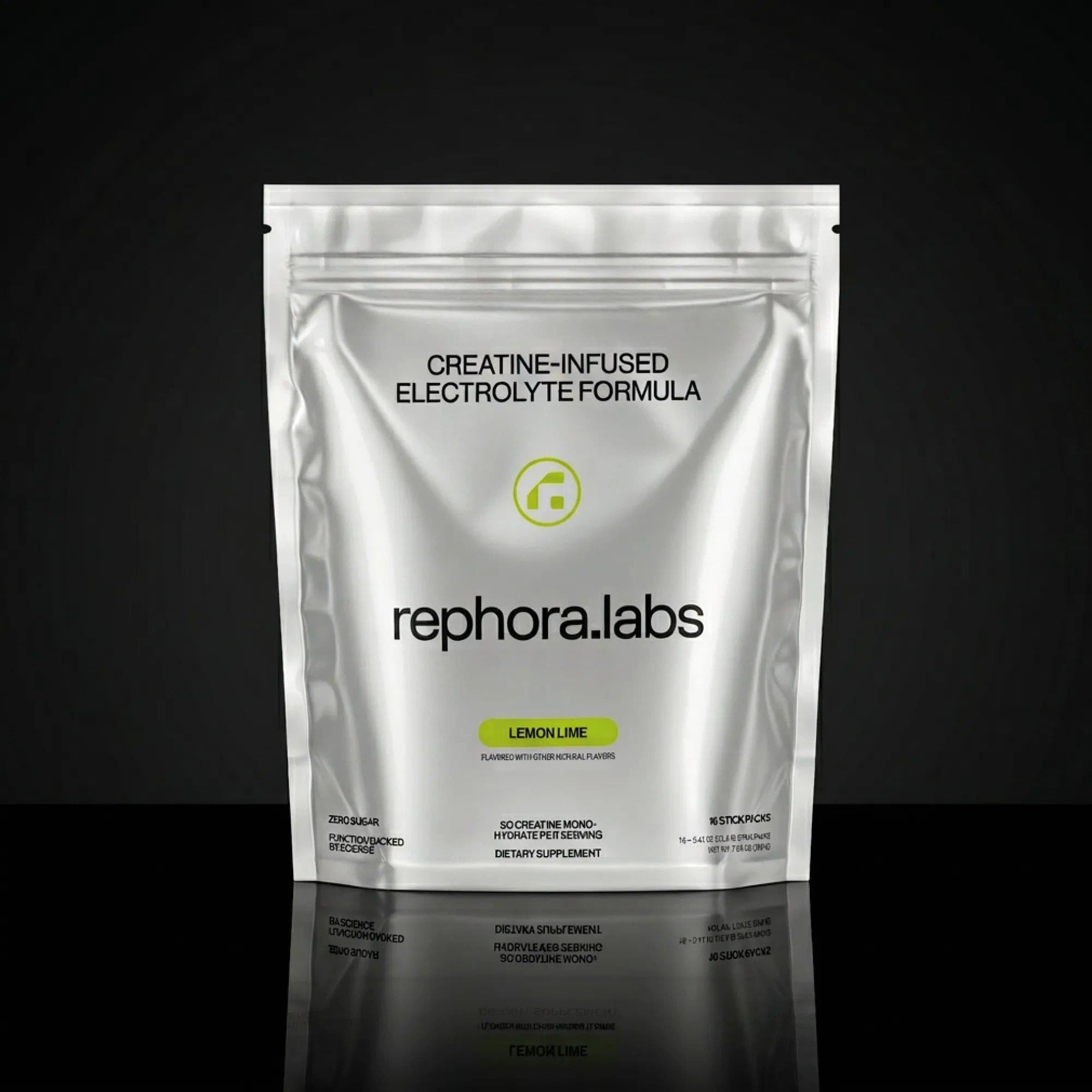
Shop Rephora Lemon Lime on the brand site, or start at rephoralabs.com.
What the brand site states, and what we are repeating as brand facts rather than as a new trial:
- 5 g creatine monohydrate per stick, plus the brand’s IonGate electrolyte blend (840 mg sodium, 1,519 mg chloride, 250 mg potassium, 75 mg magnesium).
- Zero sugar. Mix in about 16 oz of water and drink it.
- Lemon Lime listed at $34.99. The brand claims third-party testing and Made in USA. Those are manufacturer statements.
- We have not run a head-to-head tendon trial on the stick. We would not. The point is narrower: if you want creatine, buy a dry monohydrate you mix fresh, read the packet, and skip the peptide menu.
If you never want to hear a sister brand named, use any creatine monohydrate powder with a lot number you can look up. The rating does not require our label.
The short version
TB-500 as sold is a research-chemical name for a short synthetic fragment related to thymosin beta-4. It is not the 43-amino-acid protein, and it is not a recovery vitamin. Full-length Tβ4 has a thin topical ophthalmic file. That file does not transfer to an injectable fragment. FDA’s compounding briefing proposed against listing TB-500 free base or acetate on the 503A bulks list, reported no human clinical studies of TB-500, and flagged characterization and immunogenicity problems. A later advisory-committee vote is not a regulation. Gray-market vials and cash-pay “thymosin” menus are Poor. Physio, sleep, protein, and creatine monohydrate as labeled remain Excellent foundations. They are still not a peptide. They are simply the better-studied place to spend a week.
If a clinic will not show you the outcomes trial behind the vial, walk out. If a bottle claims to repair a tendon because a mouse skin study or an eye-drop trial did, leave it on the shelf. If a carton arrives with a research-use sticker and a wellness caption, that is your answer.
Nutritionist Guide is not your clinician. This page is not medical advice, not a dose table, and not a protocol for compounding, injecting, or ingesting TB-500 or thymosin beta-4. People who are pregnant, trying to conceive, breastfeeding, living with liver or kidney disease, immunosuppressed, or managing a complex medication list should not start a research peptide because a podcast said so. Talk to the clinician who already has your chart. Athletes subject to anti-doping rules should treat WADA S2.3 as a stop sign, not a gray area.
Bibliography
Sources and references
Linked citations go to the publisher, PubMed, PMC, or the news report. Marketplace assays are industry testing, not randomized trials.
- 01U.S. Food and Drug Administration. FDA briefing document: evaluation of TB-500-related bulk drug substances (TB-500 free base and TB-500 acetate) for the Pharmacy Compounding Advisory Committee, July 23-24, 2026. Dated May 15, 2026. Reports a seven-amino-acid N-acetylated fragment of thymosin beta-4 (Ac-Leu-Lys-Lys-Thr-Glu-Thr-Gln-OH); no USP or NF monograph; not a component of an FDA-approved drug; nomination withdrawn; FDA evaluated both salts on its own initiative. Staff conclusion: evaluation criteria weigh against placing either form on the 503A bulks list. FDA did not identify clinical studies of TB-500 in humans. Briefing language is not a final listing decision.
- 02U.S. Food and Drug Administration. July 23-24, 2026 meeting of the Pharmacy Compounding Advisory Committee. TB-500 free base and acetate were on the agenda for wound-healing use. FDA’s overview briefing proposed that TB-500 free base not be included on the 503A bulks list and that TB-500 acetate not be included. A committee vote, if one occurred, is advisory. It is not notice-and-comment rulemaking, not a finished 503A listing, and not drug approval.
- 03Sosne G, Qiu P, Goldstein AL, Wheater M. Biological activities of thymosin beta4 defined by active sites in short peptide sequences. FASEB J. 2010;24(7):2144-2151. PMID 20179146. Full-length Tβ4 is 43 amino acids. The central actin-binding sequence LKKTETQ (residues 17-23) is reviewed as a short motif linked to angiogenesis, wound healing, and cell migration in mechanistic work. This is structure-function biology, not a consumer injectable monograph. PubMed
- 04Philp D, Huff T, Gho YS, Hannappel E, Kleinman HK. The actin binding site on thymosin beta4 promotes angiogenesis. FASEB J. 2003;17(14):2103-2105. PMID 14500546. Preclinical: endothelial-cell migration and chick aortic-arch sprouting. The seven-amino-acid actin-binding motif is labeled as essential for those angiogenic readouts. Not a human tendon RCT. PubMed
- 05Philp D, Badamchian M, Scheremeta B, Nguyen M, Goldstein AL, Kleinman HK. Thymosin beta4 and a synthetic peptide containing its actin-binding domain promote dermal wound repair in db/db diabetic mice and in aged mice. Wound Repair Regen. 2003;11(1):19-24. PMID 12581423. Animal dermal-wound models. Not a human musculoskeletal outcomes trial. PubMed
- 06Sosne G, Ousler GW. Thymosin beta 4 ophthalmic solution for dry eye: a randomized, placebo-controlled, Phase II clinical trial conducted using the controlled adverse environment (CAE) model. Clin Ophthalmol. 2015;9:877-884. PMID 26056426. NCT01387347. Seventy-two adults, 0.1% full-length Tβ4 eye drops versus vehicle for 28 days. Primary endpoints (ocular discomfort and inferior corneal staining at day 29) did not differ significantly. Some secondary signs and CAE discomfort scores favored Tβ4. Topical ophthalmic Tβ4, not systemic TB-500. PMC4445951
- 07Sosne G, Dunn SP, Kim C. Thymosin beta4 significantly improves signs and symptoms of severe dry eye in a phase 2 randomized trial. Cornea. 2015;34(5):491-496. PMID 25826322. NCT01393132. Nine patients, topical 0.1% RGN-259 (full-length Tβ4) versus vehicle. The paper reports a 35.1% reduction in ocular discomfort and a 59.1% reduction in total corneal fluorescein staining versus vehicle at day 56. Small topical trial. Not a license to sell an injectable fragment for a hamstring. PubMed
- 08DeFoor MT, Dekker TJ. Injectable therapeutic peptides: an adjunct to regenerative medicine and sports performance? Arthroscopy. 2025;41(2):150-152. PMID 39265666. Editorial review. Notes scarce orthopaedic literature on clinical use and outcomes of such peptides in tendon, muscle, and cartilage injury, including TB-500 described as a synthetic fraction of the 43-amino-acid thymosin beta-4 protein. PubMed
- 09Rahaman KA, Muresan AR, Min H, Son J, Han HS, Kang MJ, et al. Simultaneous quantification of TB-500 and its metabolites in in-vitro experiments and rats by UHPLC-Q-Exactive Orbitrap MS/MS and their screening by wound healing activities in vitro. J Chromatogr B. 2024;1235:124033. Analytical and rat work plus an in-vitro scratch assay. Not a human efficacy RCT.
- 10World Anti-Doping Agency. World Anti-Doping Code International Standard Prohibited List 2026. In force 1 January 2026. Section S2.3 Growth factors and growth factor modulators names thymosin-beta-4 and its derivatives, for example TB-500. Prohibited at all times.
- 11Rephora Labs. Product page at rephoralabs.com/products/rephore-lemon-lime-flavor. Brand-stated stick facts: 5 g creatine monohydrate plus IonGate electrolytes (840 mg sodium, 1,519 mg chloride, 250 mg potassium, 75 mg magnesium), zero sugar, mix in about 16 oz water; Lemon Lime listed at $34.99; third-party tested and Made in USA claims. Not an independent assay and not a tissue-repair trial.